
A City Built on Making Things
Birmingham still makes a great deal. Metal finishing, castings, automotive parts, food and drink all rely on gas for process heat as well as space heating. That shapes the work we do here.
Alongside the factories are hundreds of restaurant kitchens, a large hospital and university estate, and a city centre that is being rebuilt around the new HS2 station at Curzon Street. Each has its own gas needs, and all of them need pipework that is tested, recorded and safe.
The Queen Elizabeth Hospital, the universities at Edgbaston, Aston and the city centre, and a long list of public buildings also run large boiler plant that has to be maintained and certified.
Gas Safe RegisteredReg. No. 568617
Which Commercial Gas Services Do Manufacturers Ask For?
New supplies to plant and process equipment
Ovens, furnaces, dryers and burners need pipework sized for the full load, with the right isolation and pressure control. See commercial gas installation.
Testing after alterations
Any change to industrial pipework should be followed by a strength and tightness test to IGEM/UP/1 before gas goes back on. See gas testing and purging.
Nitrogen purging
Large diameter factory mains hold a lot of gas. We purge them with nitrogen so that gas and air never mix inside the pipe.
Connections without a shutdown
Where a site cannot stop production, hot tapping lets us add a branch to a live main.
Warehouse and factory heating
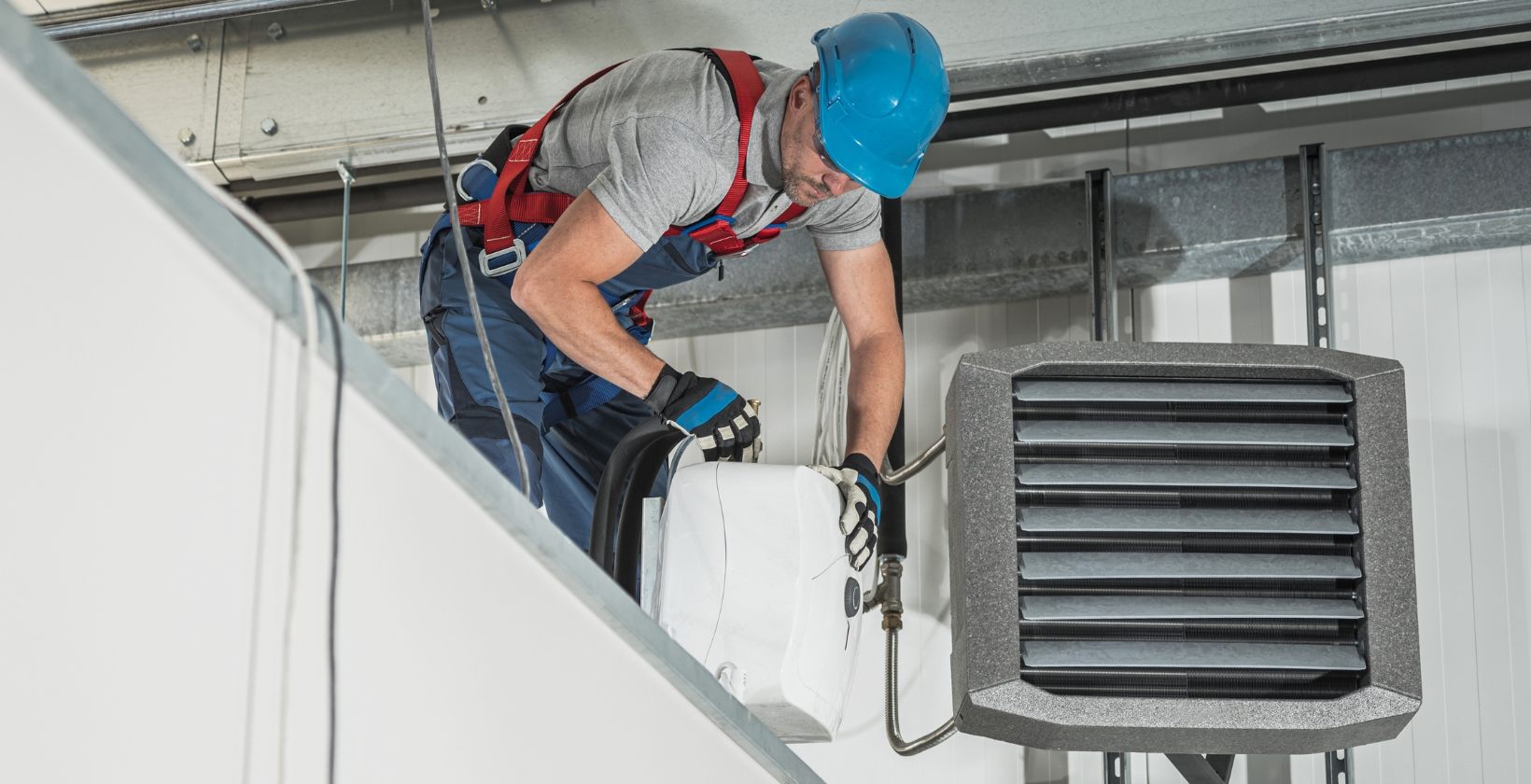
Warm air and radiant heaters at high level, each with its own tested supply. See commercial heating systems.
What Does a Tightness Test Involve?
A tightness test proves that pipework does not leak. The engineer isolates the section, connects a gauge and raises the pressure to the test level. The pipework is left to settle so that temperature changes do not distort the reading. Then the pressure is watched for a set period.
How long that takes, and how much pressure drop is allowed, depends on the volume of the pipework, the gauge being used and whether the installation is new or existing. IGEM/UP/1 sets out the calculation. On a large factory system the test can take some time, so we plan it around production.
New pipework has a strength test first, at a higher pressure, to prove the joints and fittings before the tightness test begins.
Commissioning New Plant and Decommissioning Old Lines
Commissioning is the step that turns a finished installation into a working one. We check the pipework records, purge the line, light the appliance and confirm that pressures, safety devices and ventilation are correct.
Decommissioning matters just as much. Older works around Tyseley, Aston and Witton often contain dead legs and abandoned branches from earlier layouts. We isolate them, purge them to a safe point, cap them and label them, then update the line diagram so the next engineer knows what is live.
Kitchens From the Balti Triangle to Brindleyplace
The kitchens of Sparkbrook and Balsall Heath, the restaurants around Brindleyplace and the Mailbox, and the venues near the NEC all run on gas. We install and test kitchen pipework across Birmingham, fit the interlock between gas and extraction that BS 6173 calls for, and carry out annual catering inspections. See commercial catering.
Digbeth and the Jewellery Quarter bring a different job. Former workshops there are being turned into bars, studios and food halls. A change of use usually means a new or larger supply, and a test certificate before opening.
You can read more about our full range of commercial gas services, including commercial gas installation and commercial heating systems, or see the other areas we cover, such as Coventry and Wolverhampton. Commercial Gas Certificate works nationwide.
Who Looks After Gas and Highways in Birmingham?
Cadent owns and runs the gas distribution network across the West Midlands. It is responsible for the pipework up to the emergency control valve at your meter. Everything after that is yours, and that is where we work.
Birmingham City Council is the highway authority. If a buried supply has to cross a public road or footway, the work needs a street works permit from the council. We deal with pipework on private land, and we can advise when the network or the council needs to be involved.
The Clean Air Zone covers all roads inside the A4540 Middleway ring road. It does not affect the gas work itself, but it is worth knowing when planning deliveries and plant to a city centre site.
Gas Safety Records and Annual Inspections
The Gas Safety (Installation and Use) Regulations 1998 require employers to keep gas appliances and pipework in a safe condition. For Birmingham employers and landlords, an inspection every 12 months is the accepted way to show that.
We inspect the installation, record what we find and issue a gas safety record. Where we find a fault, we explain it plainly and quote for the repair. See commercial gas certificates.
Where Do We Work Around the City?
We cover the whole Birmingham B postcode area, from B1 in the centre out to Sutton Coldfield, Erdington, Northfield, Longbridge and Minworth. We regularly travel to Solihull, West Bromwich, Oldbury, Smethwick, Dudley, Walsall and Halesowen.
We also cover the distribution parks to the east, including Hams Hall near Coleshill, and the rest of the West Midlands. If you are not sure whether we reach your site, ask. We work across the UK.
What Happens When You Call?
- You tell us about the site, the gas equipment and what you need.
- For larger jobs we visit, look at the pipework and check isolation and purge points.
- You receive a written quote. Quotes are free and carry no obligation.
- We agree a date that suits production or trading hours, then carry out the work and issue the records.
If you smell gas, call the National Gas Emergency Service on 0800 111 999 first. For repairs inside your premises, our emergency gas repairs team covers Birmingham and the Black Country at any hour.
Discuss Your Birmingham Site With Us
If you run a factory, a kitchen or a commercial building in Birmingham, contact Commercial Gas Certificate. Tell us what you are planning and we will explain the testing, purging and certification it needs.